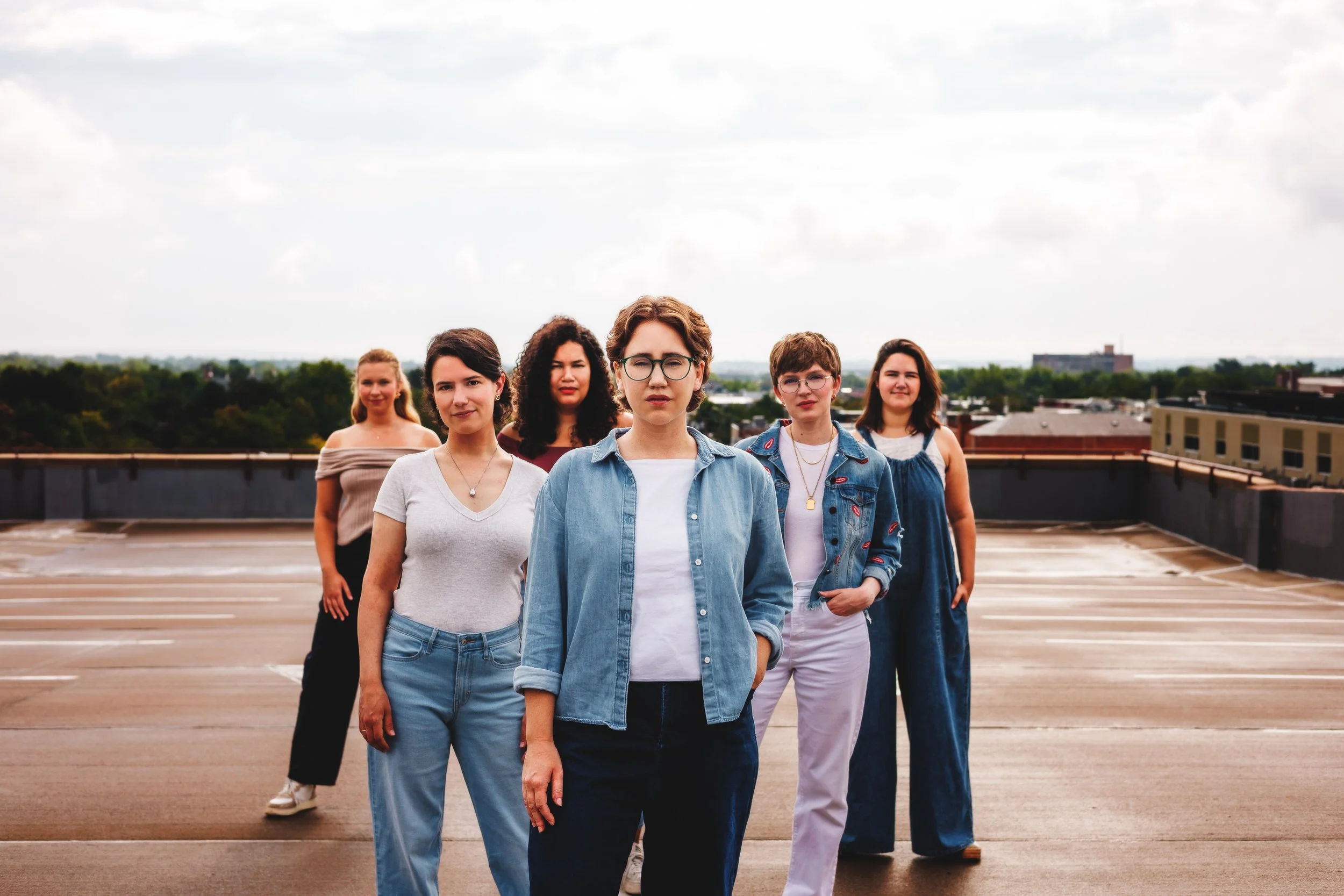
Pictured: Lyyra Press Promotional Photoshoot in Boulder, CO. Jessica Dnea Imagery
This was the kind of photography project where the shoot day was only the visible part.
Lyyra’s session took several months of conversations, location planning, scheduling, creative development, wardrobe coordination, licensing discussions, and communication across a larger team. The final plan included two distinct sessions in Boulder: on-location press photography around Pearl Street and an indoor production at a styled home booked through Home Studio List.
Each session had its own purpose.
The first created current promotional images with a relaxed, modern identity. The second was designed around album artwork, formal group portraits, and updated individual headshots. The finished photographs needed to work for Lyyra, their creative team, their label, album-release materials, publications, websites, streaming platforms, and future promotional needs.
That requires more than showing up with six people and finding a wall.
It requires understanding what every image needs to communicate, who will use it, where it may appear, and how the separate pieces will work together once the campaign leaves the photographer’s hands.
Who is Lyyra?
Lyyra is an all-American, all-women vocal ensemble created by The VOCES8 Foundation. The six-member group includes Anna Crumley, MaryRuth Miller, Elizabeth Tait, Ingrid Johnson, Aryssa Leigh Burrs, and Cecille Elliott.
Their music brings together experience in classical, jazz, pop, and folk traditions. Lyyra’s official biography describes the group as working to redefine upper-voice ensemble music and demonstrate the full range of women’s vocal artistry.
Lyyra signed an exclusive recording agreement with Warner Classics in 2025. The group performs and records internationally while also participating in the VOCES8 Foundation’s music-education work.
That professional reach mattered for this project. The photographs were not being created for one Instagram post or a temporary website update. They needed to move through a larger professional system involving the ensemble, creative leadership, publicity, album design, and label use.
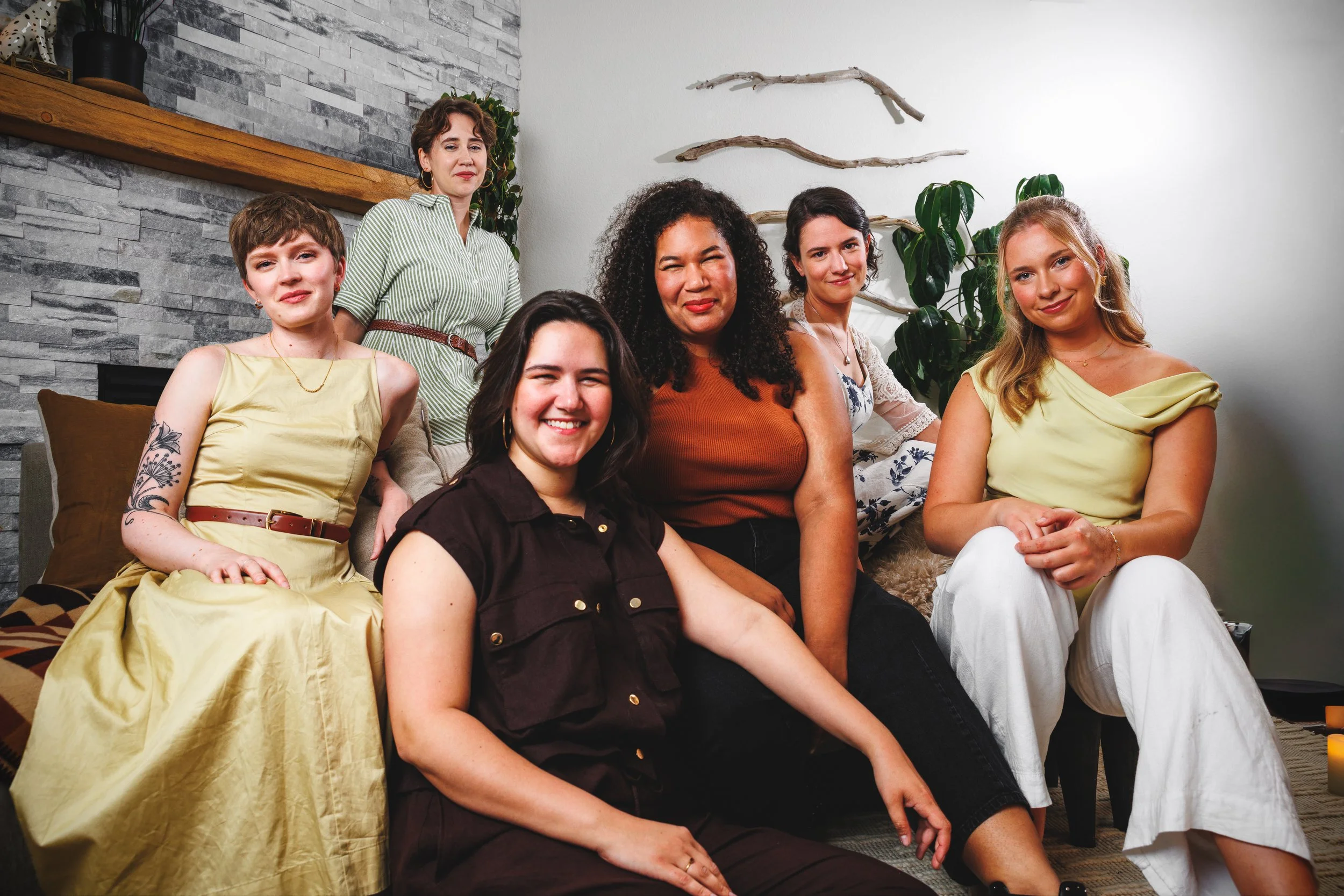
Pictured: Lyyra Press Promotional Photoshoot in Boulder, CO. Jessica Dnea Imagery
What was the goal of Lyyra’s photo sessions?
The goal was to create several connected image collections that could serve different parts of the group’s career.
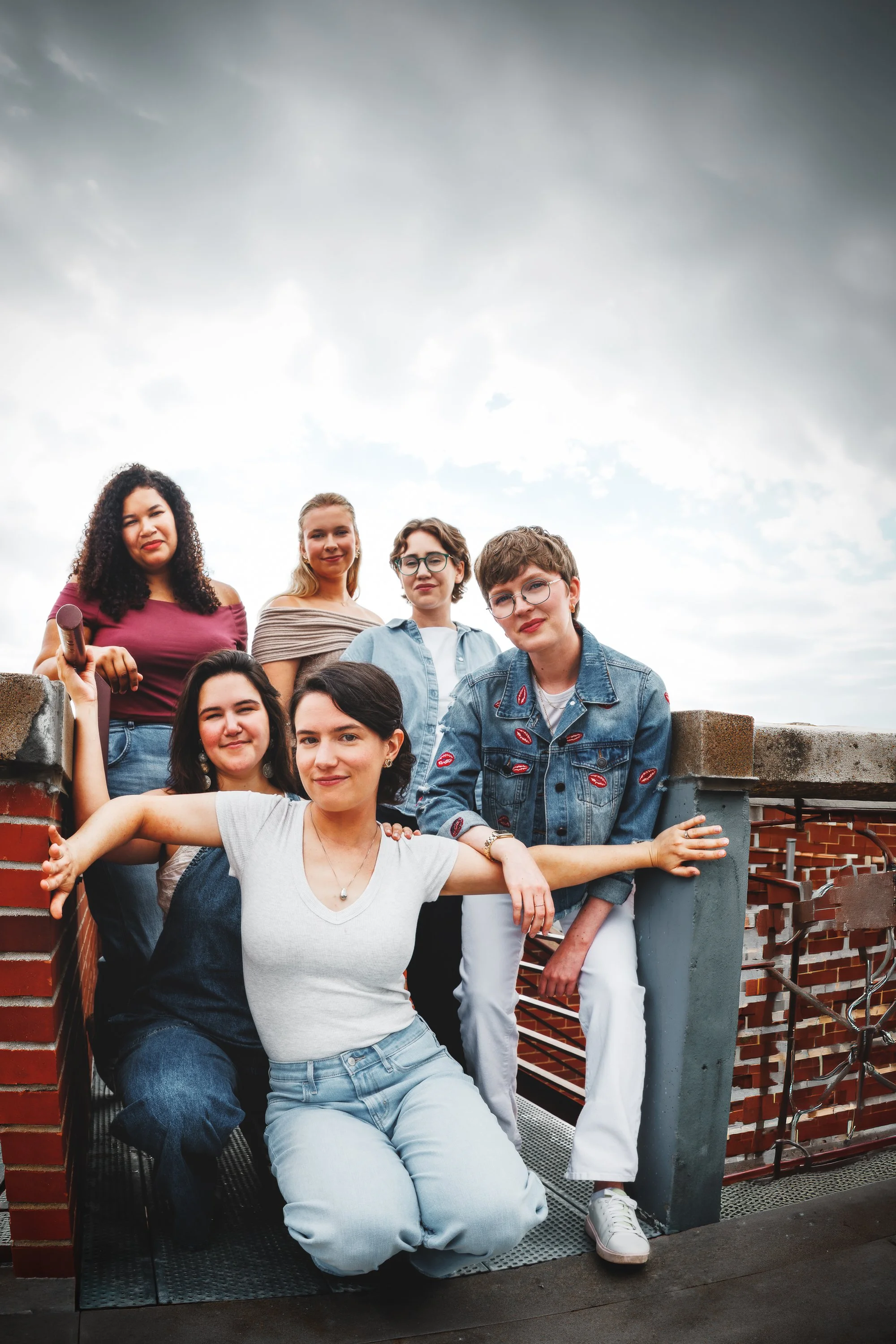
The on-location session focused on contemporary promotional photography. We created group portraits around central Boulder using brick stairways, a parking structure, open sky, architectural lines, and views over the city.
The indoor session had a more specific production purpose. It included:
Album-cover photography
Additional album and release artwork
Formal group portraits
Updated individual member headshots
Promotional images for Lyyra’s own platforms
Selected images intended for third-party label use
The two sessions needed to feel related, but they did not need to look identical.
The Pearl Street photographs feel open, modern, youthful, and approachable. The studio photographs feel warmer, more formal, organic, and connected to the album’s visual world.
That gave the team a broader library while keeping Lyyra recognizable across both sets.
Why did we divide the project into two sessions?
Trying to force every promotional, editorial, individual, and album-artwork need into one visual setup usually leaves the artist with a large collection that only does one job.
Lyyra needed both versatility and specificity.
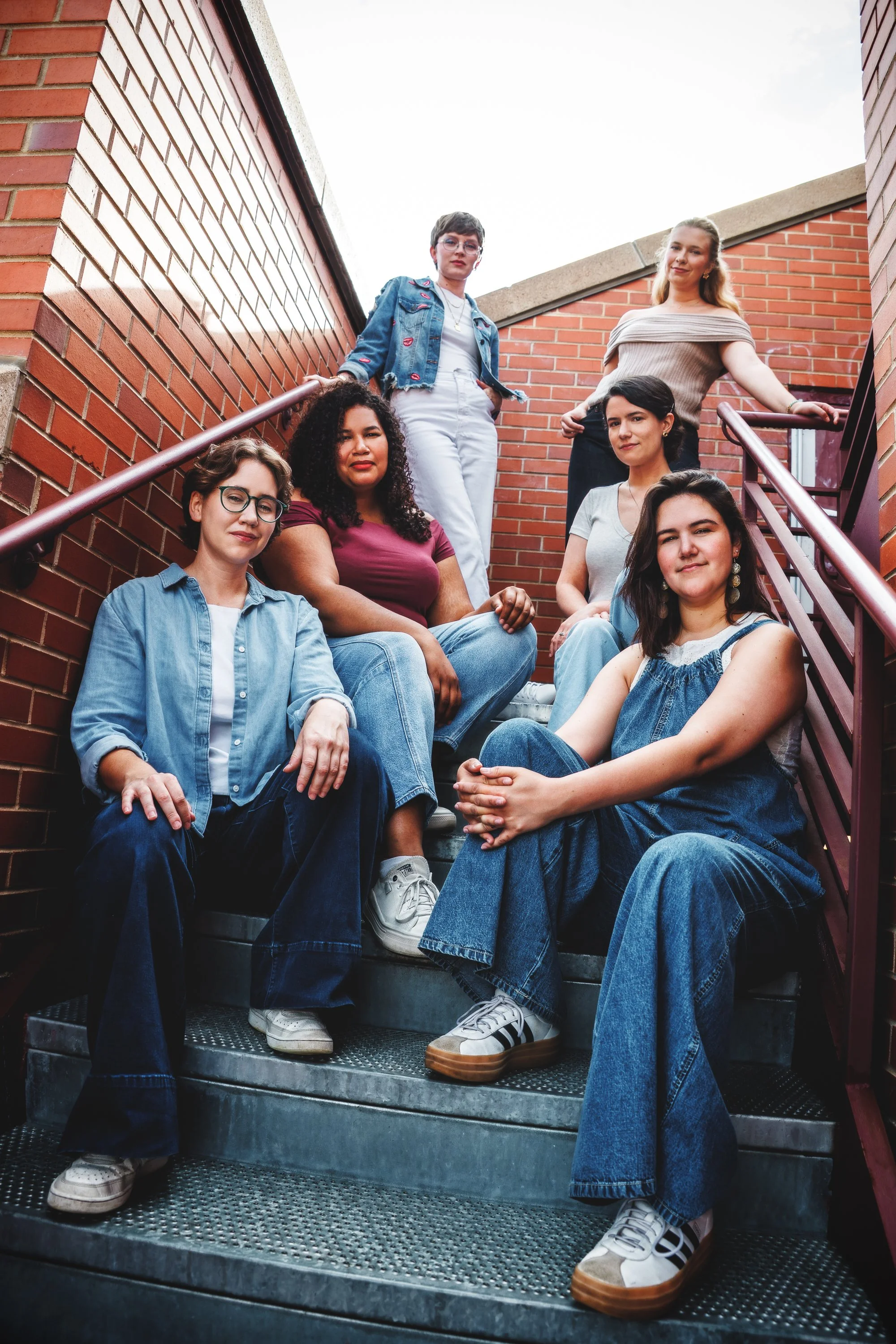
The location session allowed us to create photographs that could be used widely for press, touring, announcements, social media, websites, interviews, and general promotion. The clothing was coordinated through denim, white, soft blue, neutral tones, and muted color. Each member still looked individual, but the group read clearly as one unit.
The studio session had a more developed visual concept. The wardrobe shifted toward warm yellow, olive, rust, cream, brown, floral patterns, and softer materials. The home’s stonework, plants, natural textures, candles, wood, and neutral furniture supported that direction.
Creating separate visual environments gave each collection room to do its job properly.
How do you plan a press session for a six-person ensemble?
Group photography is not six individual portraits happening at the same time.
Every person’s position affects the entire composition. Moving one shoulder, hand, chair, or face can change the balance of the group. Height, clothing color, body direction, spacing, expression, lighting, and the intended crop all have to work together.
For a larger ensemble, I plan around several layers:
The overall shape of the group
Individual visibility
Height and seated-position balance
Wardrobe distribution
Hand placement
Facial direction
Lighting across multiple skin tones
Vertical and horizontal usage
Space for text or album design
The personality of the ensemble
The strongest group photographs look natural because the structure underneath them is working.
That structure is not accidental.
How far ahead should musicians plan a larger photo production?
For a simple solo press session, the planning period can be fairly short.
A multi-location production with six performers, a creative team, album artwork, wardrobe changes, rentals, label involvement, and expanded licensing needs more time.
This project developed over several months. That gave the team room to coordinate:
The group’s availability
The creative direction
Album-artwork requirements
Wardrobe for both sessions
Location options
Studio or home rental availability
Set design and props
The photography schedule
Individual portrait needs
Label and third-party usage
Contracts and licensing
File-delivery deadlines
Creative projects become expensive and chaotic when every decision is delayed until the shoot.
Planning early also gives everyone the chance to identify the real priorities. When time becomes tight, the highest-value images are already protected in the schedule.
What should a band or ensemble decide before contacting a photographer?
Start with the purpose of the photographs.
“New photos” is not a complete project description.
Consider what is happening during the next year:
Is there an album or single being released?
Are you preparing a press campaign?
Will a label or publicist need access?
Are you rebuilding an EPK?
Do individual members need updated biographies?
Are you booking a tour?
Will the images appear on physical products?
Does the project need album packaging or cover artwork?
Will anyone outside the artist’s immediate organization use the photographs?
Once those questions are answered, the photographer can build a session around the real need.
That affects the number of looks, image orientation, locations, lighting, editing, schedule, deliverables, budget, and licensing.
What should musicians bring to the planning process?
Bring references, but also explain what you like about them.
A reference image may be useful because of its lighting, color, emotion, composition, styling, location, texture, or album-design potential. Simply sending twenty unrelated photos places the entire job of interpretation on the creative team.
A useful reference note might say:
We like the warmth and earth tones.
We want the group to feel connected but not overly posed.
We need open space around the subjects for album text.
We want individual personalities to remain visible.
We want the location images to feel modern and approachable.
We want the album photographs to feel intimate and timeless.
The clearer the reasoning, the easier it is to build an original visual direction.
References are a communication tool. They are not instructions to recreate another artist’s campaign.
How should a group coordinate wardrobe?
Coordinated does not mean matching.
The goal is for every person to look like they belongs in the same visual world.
For Lyyra’s location session, the wardrobe used denim, white, blue, gray, burgundy, and soft neutral tones. There was enough variation to keep six people visually distinct, but no one outfit fought against the rest of the group.
The studio wardrobe moved into a warmer palette. Yellow, rust, brown, cream, green, black, and botanical details complemented the plants, stone wall, candles, natural wood, and home interior.
For a group session, consider:
Color distribution across the lineup
Light and dark balance
Necklines and sleeve lengths
Fabric texture
Patterns
Shoes
Jewelry
How each outfit looks while sitting
Whether the clothing works from every angle
How the wardrobe interacts with the location
Lay every outfit together before the shoot.
A shirt may look perfect alone and become a visual emergency when it is placed beside five other patterns.
Why did we photograph around Pearl Street?
Central Boulder gave us several useful environments within a manageable area.
We used a brick stairway for a structured vertical group portrait. The steps naturally created different elevations while the brick and metal rails framed the ensemble.
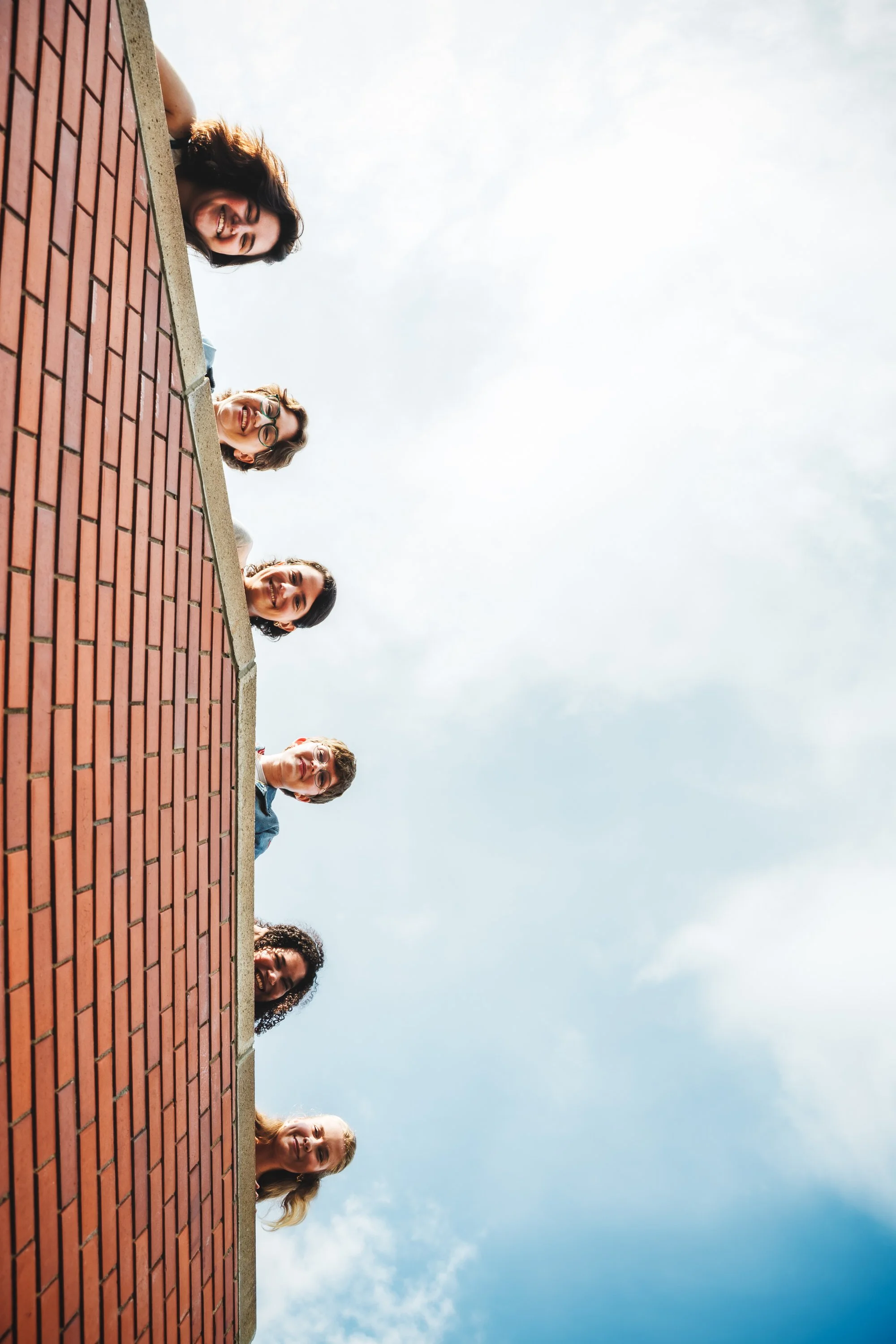
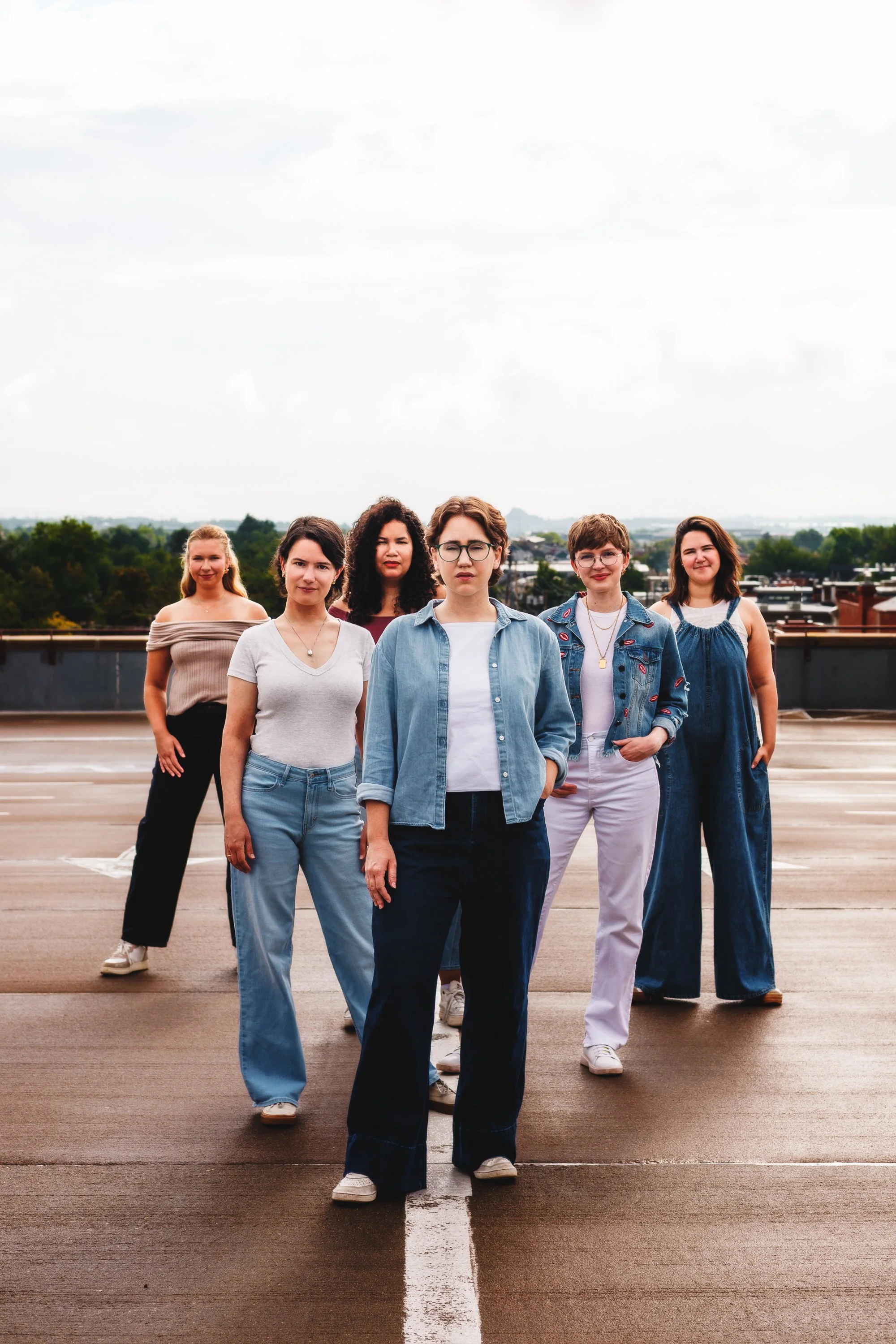
We also moved to the upper level of a parking structure, where the group could be photographed against open sky, distant trees, rooftops, and the surrounding landscape. That gave us cleaner compositions, more breathing room, and a different sense of scale.
The rooftop photographs allowed us to create both direct promotional portraits and more conceptual layouts.
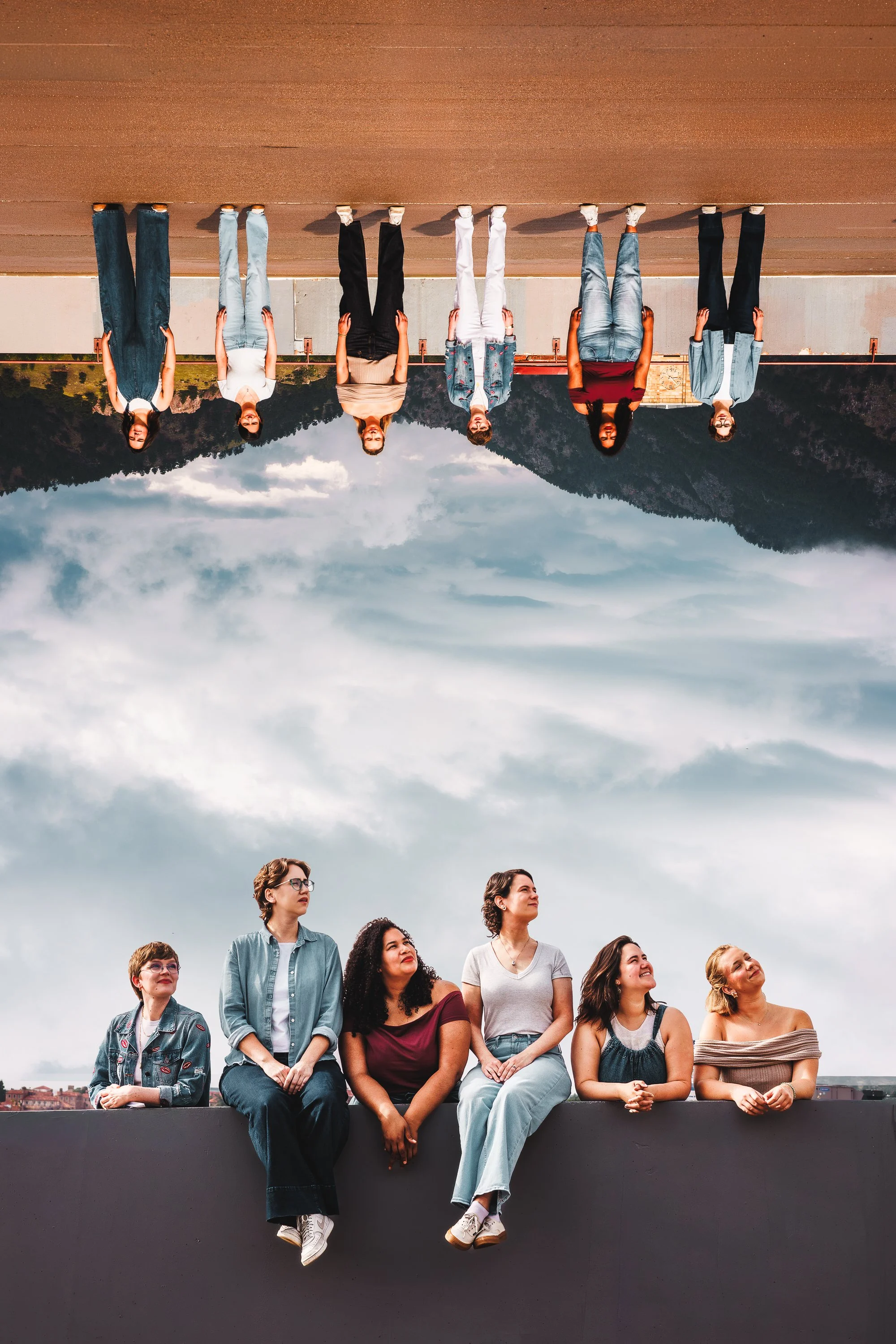
One of the final pieces combines two versions of the group across an inverted landscape. That image is less traditional, but it still keeps every member recognizable. It gives the group an option that feels editorial and graphic while remaining connected to the rest of the session.
Why use a styled home for an album-cover session?
A commercial studio is useful when a project needs seamless backgrounds, large lighting setups, controlled sets, or specialized equipment.
A styled home can provide something different: finished rooms, furniture, texture, architectural details, plants, windows, and multiple environments within one rental.
The indoor location for Lyyra was booked through Home Studio List, a platform featuring styled homes that can be rented by the hour for photo shoots and creative productions.
For this project, the home already offered many of the visual elements the creative direction needed. The stone fireplace, large plants, warm wood, neutral walls, mirrors, curtains, and seating gave the team a strong base.
The client’s creative team handled the set concept, styling, props, candles, and physical arrangement of the album-cover environment. I handled the photography, lighting, posing, composition, technical decisions, and final editing.
Those roles were established before the session.
That matters. A photographer can collaborate on how a set will appear through the camera, but full set design and production are separate services unless they are included in the scope.
What is the benefit of working with a larger creative team?
A strong team can bring more depth to a project because different people are responsible for different parts of the final result.
The artist understands the music and its emotional direction. Creative leadership connects that music to the larger campaign. Stylists and designers shape the physical world. The photographer translates those ideas into finished images that need to function technically and commercially.
The benefit disappears when every person gives unrelated directions during the session.
Larger teams work best when:
One primary contact is established
Final decisions have a clear approval process
The shot list is prioritized
Roles are defined
Changes are communicated before the shoot
The photographer knows the intended crops and uses
The team agrees on who can approve final selections
The licensing users are identified
Creative collaboration is valuable. Six simultaneous directors yelling from different corners of a living room is not collaboration. It is a hostage situation with mood boards.
How do you photograph an ensemble while preserving individual personality?
The group needs to look connected, but the members should not disappear into one symmetrical block.
Each person brings a different face, posture, energy, height, style, and relationship to the camera. I use those differences as part of the composition.
Some group photographs are intentionally structured and direct. Others allow more movement, interaction, varied eye lines, or asymmetry.
The rooftop images include both approaches. One arrangement places the members in a strong forward formation, creating depth and leadership through the center. Another places them seated beside one another, looking upward with a more open and conversational feeling.
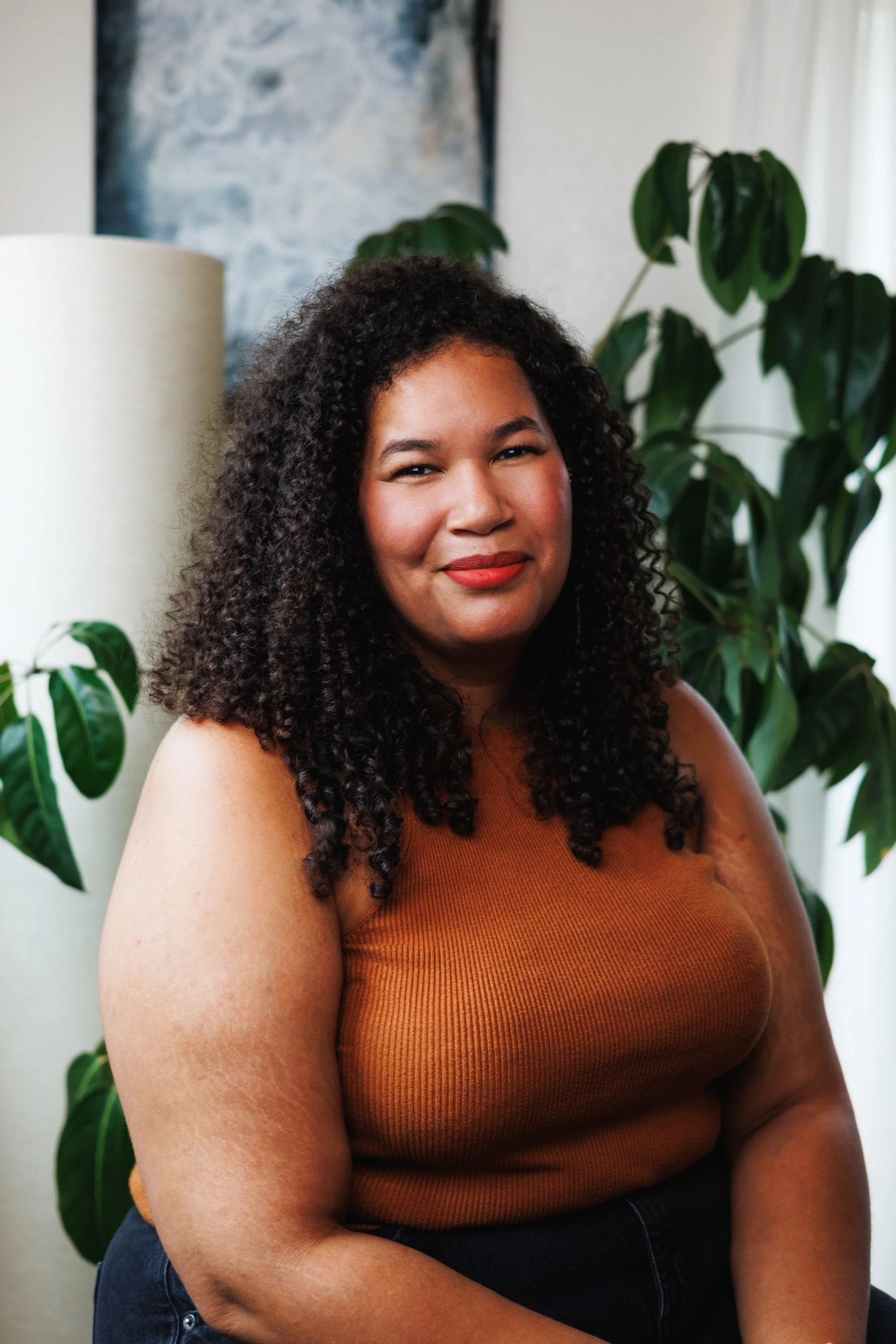
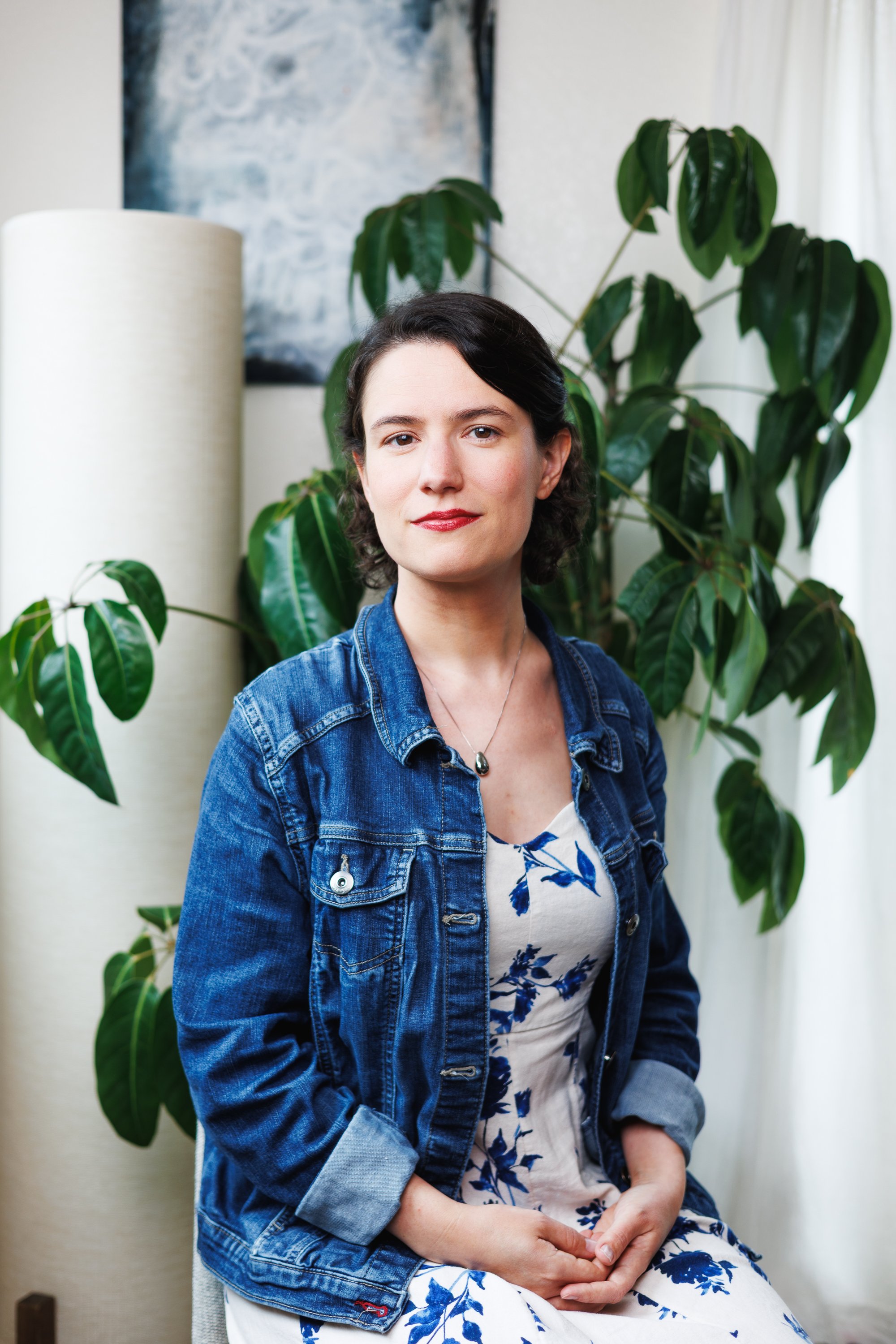
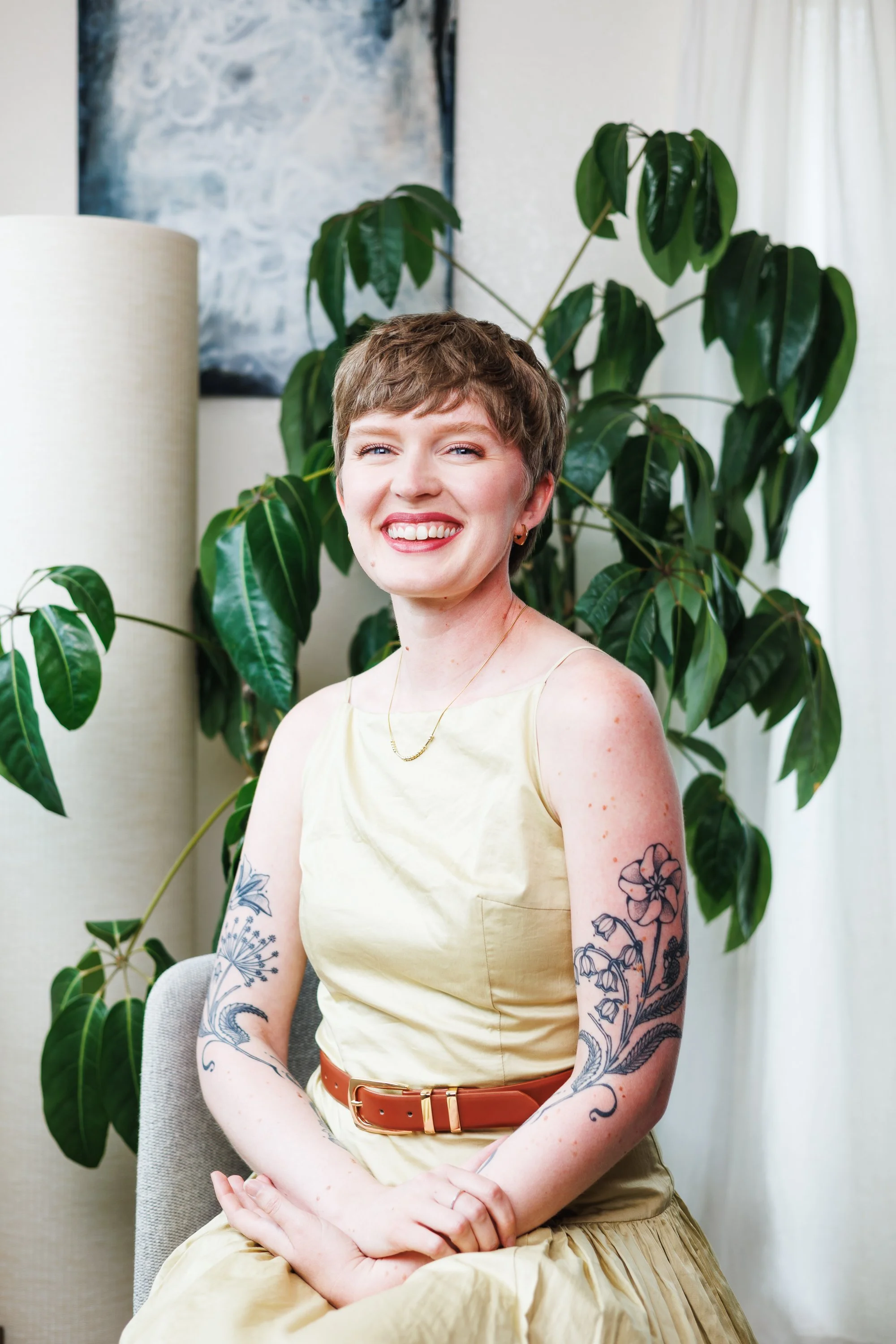
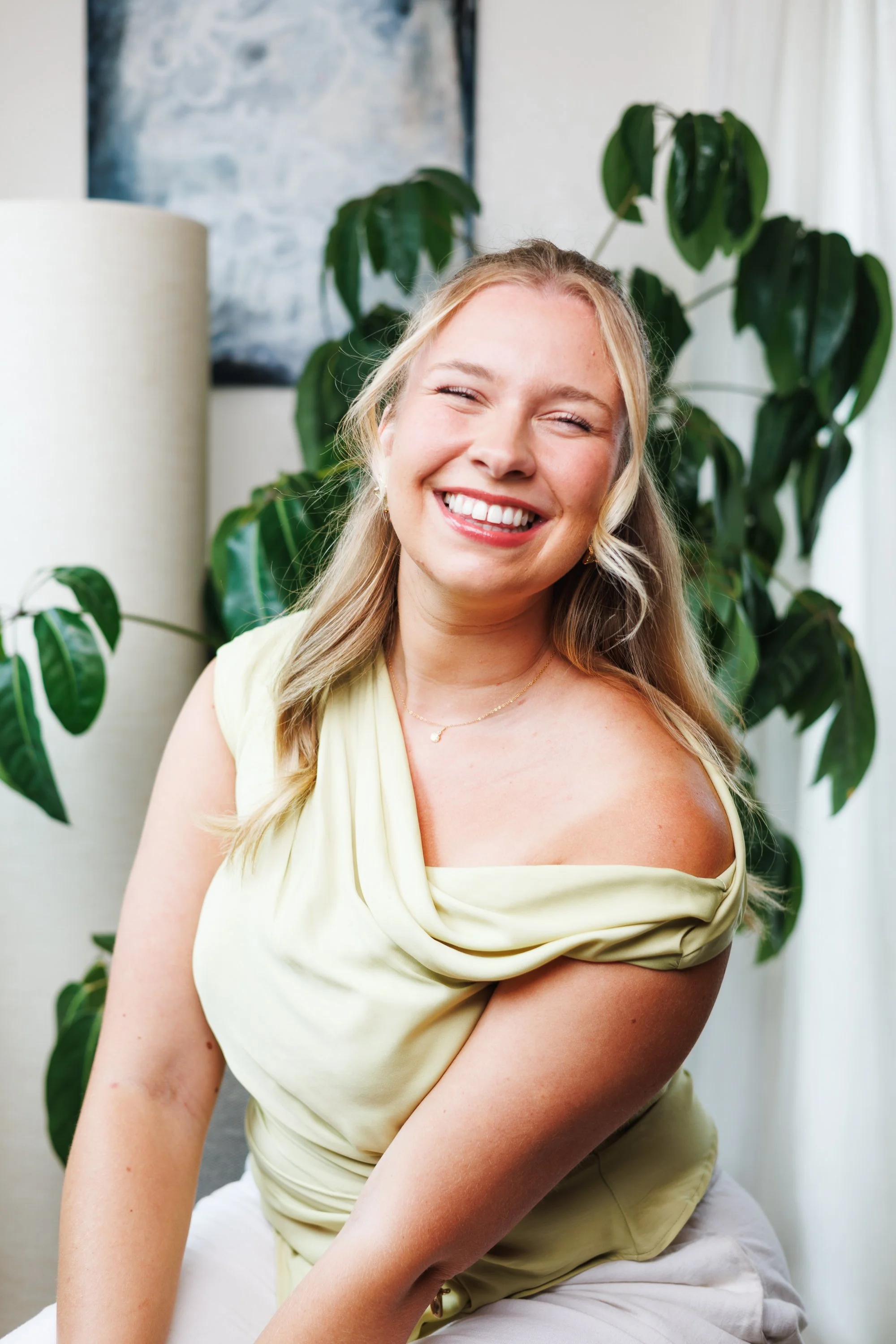
The indoor portraits are more composed, but the seating, hand placement, wardrobe, and expression still allow each singer to remain distinct.
The goal is unity, not duplication.
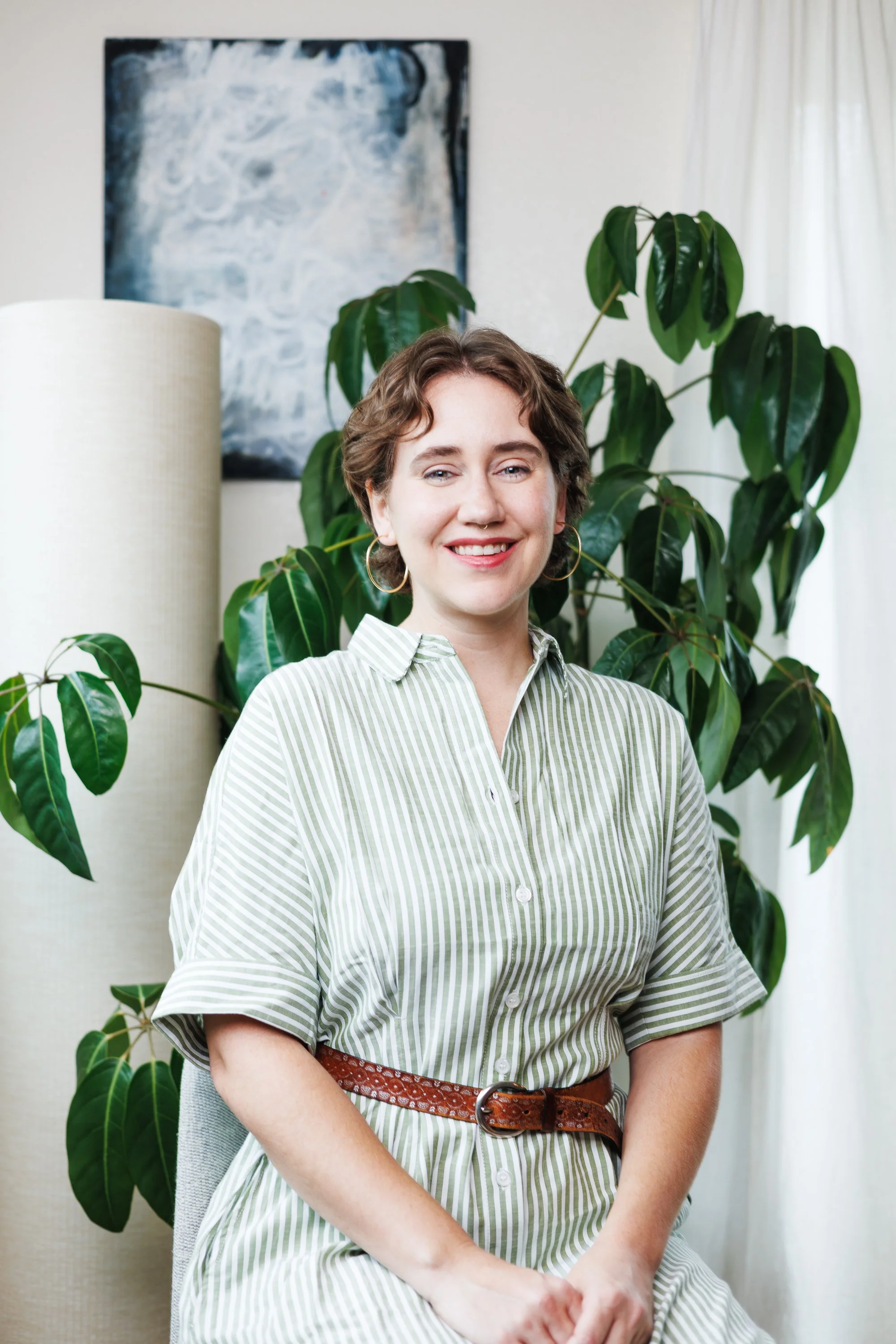
Why did each member need an updated headshot?
A professional ensemble needs more than one group image.
Individual members may need current portraits for:
Artist biographies
Program notes
Interviews
Educational appearances
Workshops
Member announcements
Press features
Personal professional profiles
Lyyra’s website
Label and management materials
Photographing the headshots during the larger production also creates visual consistency.
Every portrait can share a related background, lighting style, crop, and editing approach. The members still look like themselves, but the files belong to the same organization.
That is much cleaner than collecting six portraits made by different photographers, in different years, under completely unrelated lighting.
What kinds of images should come from a group press session?
A useful ensemble gallery needs more than one hero photograph.
Different platforms will request different dimensions and amounts of space. A vertical poster, horizontal website banner, square streaming profile, editorial article, tour announcement, and album package cannot all use the same crop well.
A strong gallery may include:
A primary vertical group portrait
A horizontal group portrait
A wide environmental image
A tighter promotional image
A photograph with negative space
A clean press option
A more experimental editorial option
Seated and standing arrangements
Individual member headshots
Album-specific images
Alternate expressions and group configurations
These variations should be created intentionally during the session.
Cropping half the group out later is not a file-delivery strategy.
How is an album-cover photograph different from a normal press photo?
Album artwork has a more specific job.
It needs to work with the album title, artist name, typography, packaging, digital platforms, and the emotional direction of the music. It may also need to remain recognizable as a very small thumbnail.
The design team may need clean negative space, a particular orientation, or room to expand the canvas. The photographer needs to know this before final compositions are made.
An album-cover photograph also carries a different commercial value. It becomes part of the identity of a recorded release and may appear across streaming platforms, physical albums, press coverage, promotional campaigns, and archived discography.
That use should be licensed clearly.
What is the difference between the session fee and image licensing?
My session fee covers the work involved in creating the photographs.
Depending on the project, that can include:
Planning
Creative calls
Location coordination
Photography time
Lighting
Posing and direction
Equipment
Image selection
Editing
Retouching
Gallery preparation
File delivery
Licensing covers how the finished photographs may be used.
Creating an image and granting commercial rights to use that image are connected services, but they are not the same service.
A musician may book a session for general promotional photography. A record label, magazine, merchandiser, advertiser, or album distributor may later need additional rights.
Those uses need to be identified and priced according to the project.
Why did each Lyyra session have separate licensing?
The two sessions created different image collections for different purposes.
The Pearl Street session produced location-based press and promotional photographs.
The indoor session produced another group collection, individual headshots, album imagery, and the selected album-cover photograph.
Each set had its own session agreement and its own standard promotional license. Additional agreements then covered the specific expanded uses connected to the project.
Separating the licenses keeps the scope clear.
Everyone can see:
Which session the photograph came from
Which filenames are approved
Who is permitted to use them
What the approved use includes
How long the use lasts
Whether the use is promotional, third-party, or artwork-related
Which uses still require additional permission
A single sentence granting “full usage” would not communicate any of that.
What is a third-party label license?
A standard artist license may allow the artist or ensemble to use the images through their own approved platforms.
A record label is a separate organization.
When the label needs to download, publish, distribute, archive, promote, or provide the images to its own teams, that is third-party use. The extended license identifies the approved company and explains what it may do with the selected files.
For this project, label use was handled separately from Lyyra’s own promotional use.
This avoids relying on vague assumptions about whether an artist’s license automatically extends to a record company, publicity agency, designer, distributor, or other outside organization.
The agreement should name the user and the use.
What is an album-artwork license?
The album-artwork license applies to the specific image selected for the album cover.
It should identify the exact filename and the approved artwork use. Depending on the agreement, that may include the digital cover, physical release cover, album packaging, or promotional materials tied directly to the release.
Every additional use should be written into the agreement.
Album artwork does not automatically mean:
Unlimited merchandise
Unrelated future releases
Paid brand advertising
Permanent use by every third party
Transfer of copyright
Exclusive ownership of the photograph
Use across any project the artist creates later
Clear licensing is not an attempt to make the process difficult.
It prevents a successful image from slowly expanding into ten new commercial uses that were never discussed or included in the original price.
Are album artwork, label use, and merchandise the same license?
No. They are separate categories of use.
An image printed as an album cover is being used differently from the same image printed on a shirt. A label using a press portrait in a release campaign is different from an outside brand using it in an advertisement.
Possible licensing categories can include:
Artist promotional use
Third-party or label use
Album or single artwork
Physical packaging
Merchandise
Posters
Paid advertising
Extended licensing terms
Exclusivity
Image buyouts
A project may need several of these. That does not mean every project needs all of them.
The point is to choose the rights connected to the real plan.
When should licensing be discussed?
Licensing should be discussed during planning, especially when a label, publisher, commercial partner, album designer, or outside organization is already involved.
The photographer needs to know:
Who is commissioning the session
Who will pay for it
Who will receive the files
Who plans to publish them
Whether the images are for general press or a specific release
Whether album artwork is planned
Whether the label needs its own usage rights
Whether physical products will be produced
Whether paid advertising is expected
Whether exclusivity is being requested
Some final licensing decisions may depend on which images are selected. That is normal.
The general categories should still be discussed before the photographs are created. Once the final filenames and users are confirmed, the image-specific agreements can be completed.
Why are filenames included in a licensing agreement?
A filename removes ambiguity.
When a gallery contains dozens of photographs from several locations and looks, “the selected image” is not specific enough.
An image-based agreement can identify:
The exact file
The session it came from
The licensed user
The approved purpose
The term
The territory
Any restrictions
The photographer credit
That protects the artist, photographer, label, designer, and anyone responsible for placing the image.
People leave teams. Emails get buried. Campaigns are revisited months later. A clear filename remains clear.
What should musicians ask before booking an album-cover photographer?
Ask more than whether the photographer is available.
Discuss:
Whether album artwork is included
How many final images will be delivered
Whether the session includes group and individual portraits
Who is responsible for creative direction
Who is responsible for set design
Who books and pays for the location
Whether assistants or lighting equipment are needed
What promotional usage is included
Whether label rights are included
Whether merchandise requires a separate license
How image selections will be made
Who can approve the final files
What the delivery timeline is
Whether the designer needs layered files, extended canvas, or alternate crops
How the photographer must be credited
The least useful time to discover that the team expected a different service is after the shoot has ended.
How can artists make the most of one production day?
Prioritize the shot list.
Do not treat every possible photograph as equally urgent. Identify which files the project cannot move forward without.
For Lyyra, the album group images and updated member portraits were major priorities. The on-location session created the broader promotional library.
A practical order might be:
Album-cover candidates
Required horizontal and vertical group portraits
Individual headshots
Supporting album imagery
General press images
Experimental options
Build in time for resets, wardrobe changes, lighting adjustments, and moving six people between arrangements.
A schedule that looks spacious on paper can collapse quickly when every transition takes ten minutes.
How important is photography for an established music project?
Photography helps the audience understand how to enter the artist’s world.
For a group like Lyyra, the visuals need to communicate both the level of the work and the human connection between the singers. The group performs across genres, tours internationally, works with a major classical label, and represents a contemporary direction for women’s ensemble singing. Their photographs need to hold that range.
The images cannot feel like generic choir photography pasted onto a modern campaign.
They also cannot ignore the warmth, collaboration, and individuality that make a vocal ensemble compelling.
The Pearl Street images show Lyyra as current, direct, and approachable. The indoor photographs create a more intimate and developed world for the album. The individual portraits give each member room to be seen clearly.
Together, the collections communicate more than one side of the group while remaining part of the same identity.
Does a complex shoot need to feel complicated in the final photographs?
No.
The viewer should experience the final image, not the production spreadsheet behind it.
They do not need to see the months of emails, location comparisons, scheduling problems, contracts, usage discussions, furniture moves, lighting tests, wardrobe decisions, or group-position adjustments.
They should see six artists who belong together.
The planning exists so the final photographs can feel clear.
That is what this project needed: several distinct image collections, created for specific professional uses, held together by a consistent understanding of who Lyyra is and where the group is going.
The result is not just a gallery of updated photographs.
It is a visual system for press, member biographies, label promotion, album artwork, and the next stage of the ensemble’s work.
✌
Jessica Dnea